Customer Background
The Chronic Viral Illness Service (CVIS) is an essential component of the Research Institute of the McGill University Health Centre (RI-MUHC). It hosts a dedicated research team focused on patient-centric, multidisciplinary studies aimed at improving care for individuals living with chronic viral infections such as HIV, hepatitis C, and human papillomavirus (HPV). In addition to its broad translational research initiatives, CVIS also operates as a biobank, collecting patient samples, including plasma, serum, and peripheral blood mononuclear cells (PBMCs), from patients across Canada to further understand viral diseases and to develop more precise, effective treatments.
The Challenge
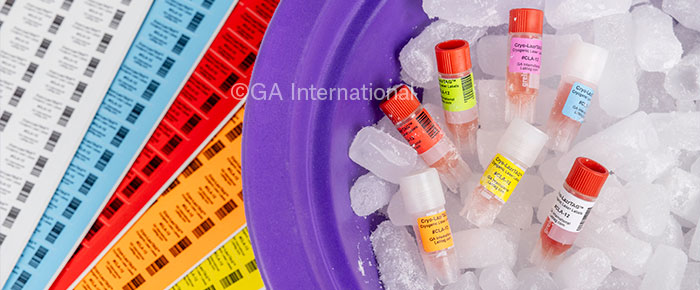
CVIS’ biobanking activities presented a significant challenge; sourcing labels that can withstand ultra-low temperatures and direct exposure to liquid nitrogen, while maintaining strong adhesion to vials and tubes. To address this, the team initially sourced barcode labels from a supplier that offered compatibility with their existing Zebra direct thermal printer. According to Reynan, the Research Lab Coordinator, the primary challenge was maintaining label durability under extreme cold storage conditions. Reynan explains: “Some labels tend to become brittle after prolonged storage in a -80°C freezer or liquid nitrogen; others may detach from the vial when frozen, making it difficult to reattach them or apply a new label. This can result in missing or wasted samples, especially when several vials have lost their labels and can no longer be accurately identified.”
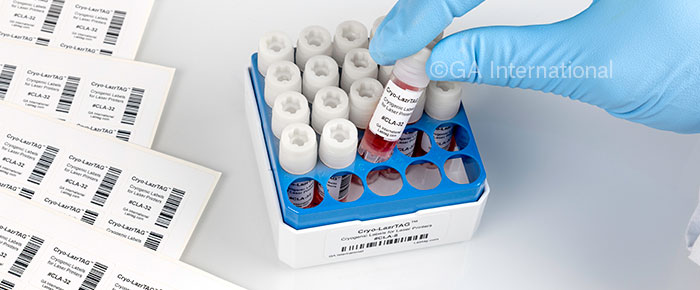
Faced with these issues, CVIS turned to GA International for a more reliable solution. GA International’s expert team recommended options from LabTAG’s cryogenic labeling line, designed specifically to withstand ultra-low temperatures, while enhancing the accuracy and reliability of sample identification.
Tailoring a Solution
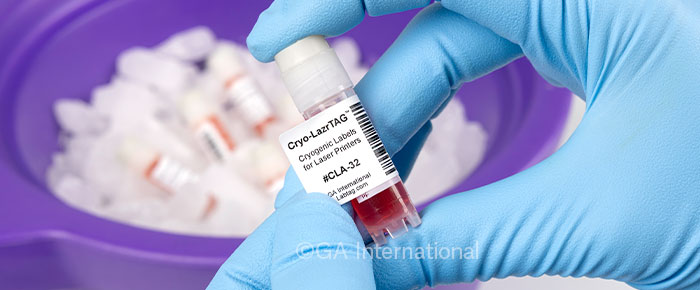
LabTAG recommended two different types of labels: for their direct thermal Zebra printer, cryogenic direct thermal label rolls, and for their laser printer, Cryo-LazrTAG™ labels. Since integrating these labels into their workflow, CVIS reported no issues with brittleness or label failure. The labels consistently maintained strong adhesion to tubes throughout long-term cryogenic storage.
Reynan highlights the practical benefits, explaining: “It does save a lot of time when you already have a formatted label than writing the information manually, which is also prone to labeling errors. It is difficult to read most handwriting on tubes, which is one factor that makes it difficult to prepare samples for analysis and for regular inventory. The situation is much worse if labels are missing because they were no longer attached to the vials, and your storage box contains different types of samples (e.g., serum, plasma, and swab aliquots).”
Conclusion
This case demonstrates a straightforward yet essential need; a high-volume lab requiring dependable labeling to ensure every sample is accurately and consistently identified. The label selection was tailored to their existing system, which includes previously purchased direct
thermal and laser printers. Additionally, some CVIS containers labeled with older products from other suppliers may require re-labeling to address issues with label durability and adhesion. CVIS is considering patented direct thermal CryoSTUCK® labels, which can adhere to tubes and vials at temperatures as low as -80°C, with subsequent storage at -80°C or -196°C. These labels also permit re-labeling of vials without thawing samples, helping to preserve their integrity. This further attests to GA International’s commitment to providing innovative labeling solutions for the lab’s ongoing research needs.