



Customer Background
Located in Sapporo, Japan, the Hokkaido University Hospital Institute of Health Science (HELIOS) is a center dedicated to medical innovation, research, and care, as well as the development of new medical technologies. The laboratory facility, located within HELIOS, collects and preserves various human biological samples. Those samples include pathological tissues, blood, and body fluids. The same laboratory also provides support for sample analysis, including nucleic acid extraction from collected and submitted specimens. The doctor managing this facility oversees the lab’s sample management workflows and the implementation of process improvements.
The Challenge
The lab previously relied on handwriting directly on sample tubes for storage. After each nucleic acid extraction, lab members would store the nucleic acid in a tube, with the number, date, and all other relevant information handwritten on the cap and side of the tube.In many cases, handwritten markings smudged or bled, making it more difficult for lab members to reliably identify their samples.

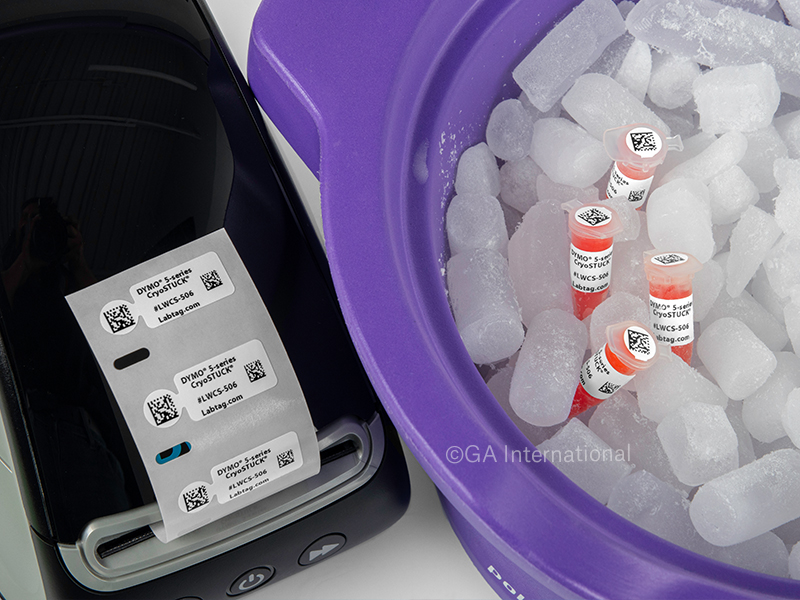
To help mitigate this issue, the lab adopted sheet labels to identify the side of the tubes. Furthermore, tube caps still needed to be labeled by hand, which still was a time-consuming process. Seeking a more reliable solution, the lab evaluated different LabTAG labels and features, such as the patent-pending SnapPEEL™, to find the most effective tube labeling method.
Tailoring a Solution
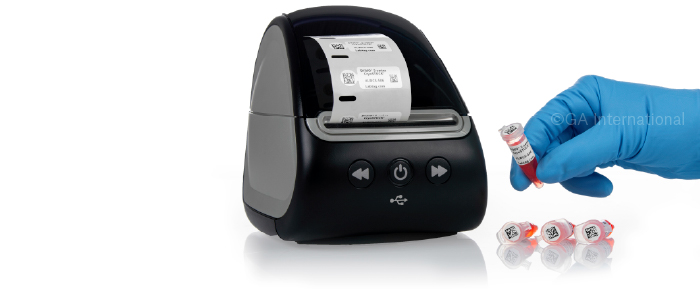
The laboratory was directed to try SnapPEEL™ cryogenic labels for frozen surfaces, specially designed for DYMO® LabelWriter 550 direct thermal printers. To support their updated workflow, the team also adopted DYMO® Connect™ Software, included with the new printer, allowing the lab to easily create 1D and 2D barcodes, as well as clear text and graphics. The software can be easily integrated with LIMS or Excel. Additionally, the Automatic Label Recognition technology ensures proper alignment of DYMO-branded labels for smooth, jam-free printing.
SnapPEEL™ is a technology that consists of a connected circle-and-rectangle label that can be peeled off in a single motion. Once the dot label is attached, the rectangular portion can be snapped off and applied to the side of the tube. The specific labels that the lab started using are capable of resisting cryogenic conditions as low as -196°C, making them ideal for long-term storage of their samples. The labels could also be applied to frozen surfaces, making re-labeling of their previously stored tubes quick and easy, without the need to thaw and lose the integrity of the samples.
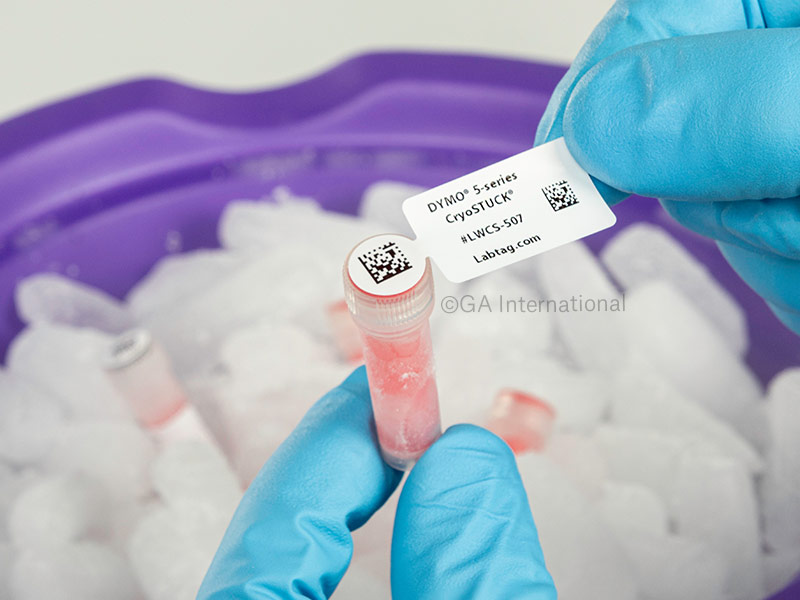
The impact of switching to SnapPEEL™ cryogenic labels was immediately noticed in the lab. The simplified labeling process improved efficiency across routine sample handling tasks, helping the team save time and streamline routine lab operations during busy periods.
“Efficiency is essential in our workflows,” the doctor noted. “SnapPEEL™ has been a major upgrade from handwriting labels; now we just enter the data, print, and stick.”
Conclusion
By adopting SnapPEEL™ cryogenic labels for frozen surfaces, the lab was able to improve the speed of its workflows and mitigate the identification issues caused by identification mix-ups. Here, SnapPEEL™ and other label features (e.g., blackout labels to conceal patient identifiers) can be comprehensively adapted to the lab’s needs, ensuring accurate, consistent, and secure sample identification. Looking ahead, as this lab manages large volumes of patient specimens, they may also require labels tailored to applications besides cryogenic storage and nucleic acid extraction.


